Along the ancient Via di San Francesco, the main thoroughfare of the new districts commissioned by Niccolò III and an elegant street in the Medieval city, stand many palazzos, patrician residences and major churches.
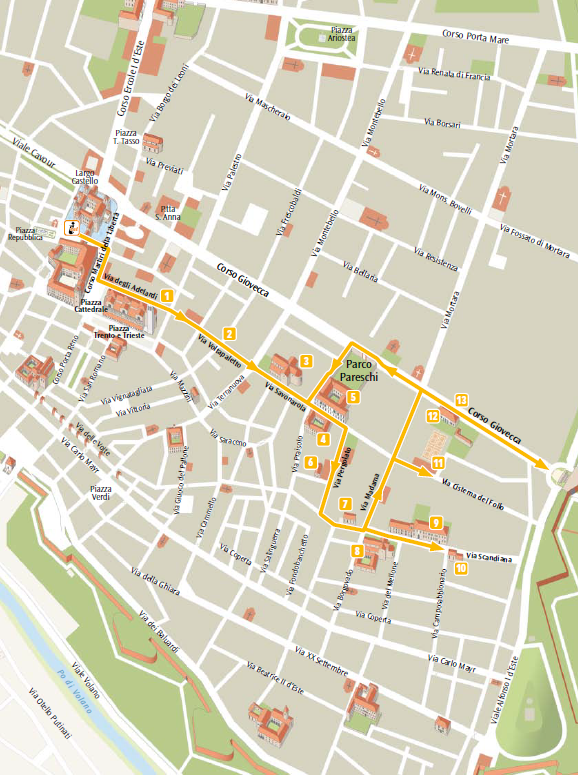
The itinerary winds among these wonders to the “Delizie”, dwellings built by the court for amusement and relaxation, far from the cares of governing.
THE ITINERARY IN BRIEF
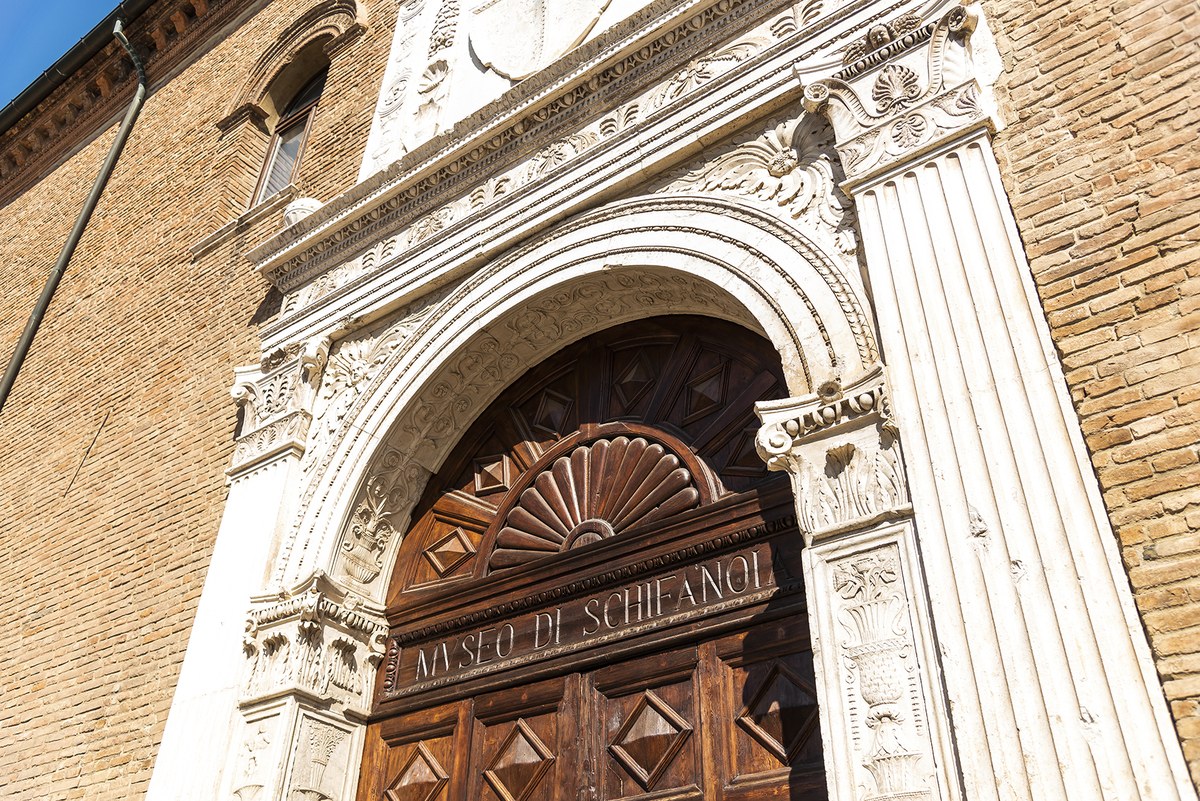
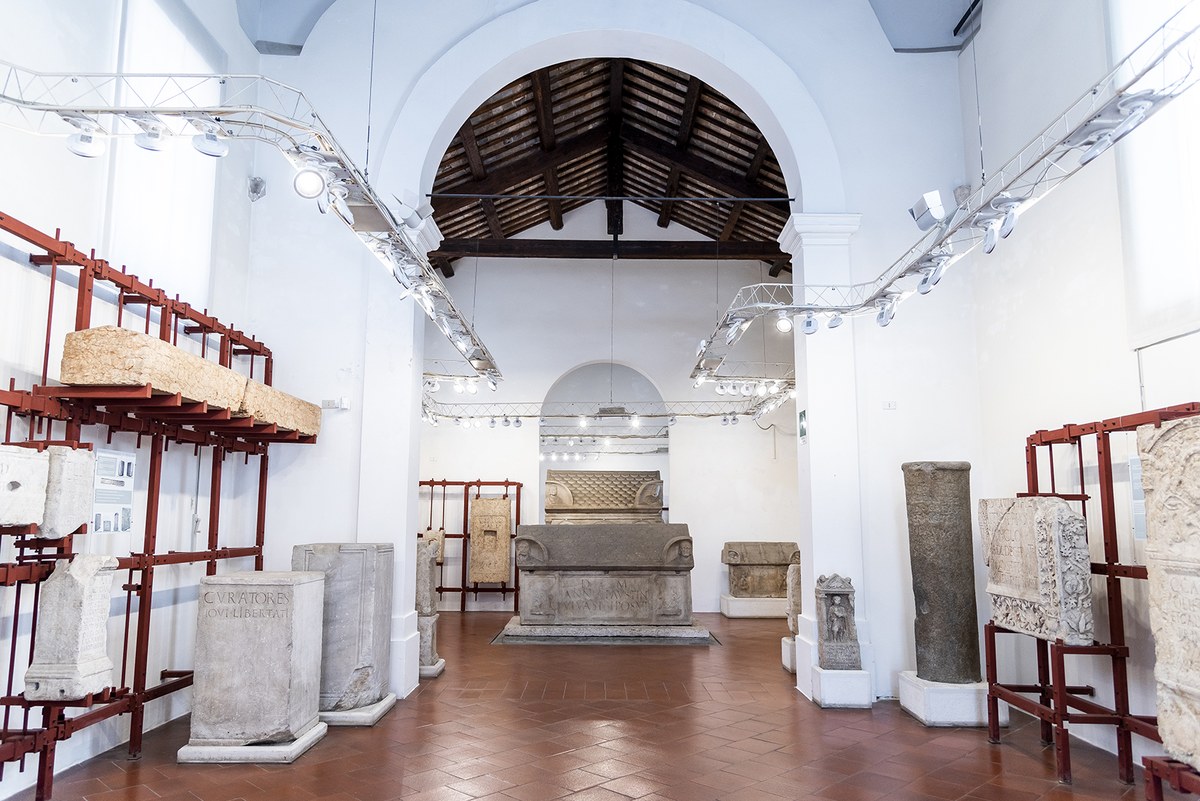
Piazza Savonarola, Cathedral, Palazzo Municipale, Palazzo Arcivescovile, Via degli Adelardi (1), Via Voltapaletto - Via Savonarola (2), Church of San Francesco (3), Casa Romei (4), Palazzo di Renata di Francia (5), Monastry of Corpus Domini (6), Oratorio dell’Annunziata (7), Church of Santa Maria in Vado (8), Palazzo Schifanoia (9), Museo Civico Lapidario (10), Palazzo Bonacossi (11), Palazzina Marfisa d’Este (12), Corso Giovecca (13).
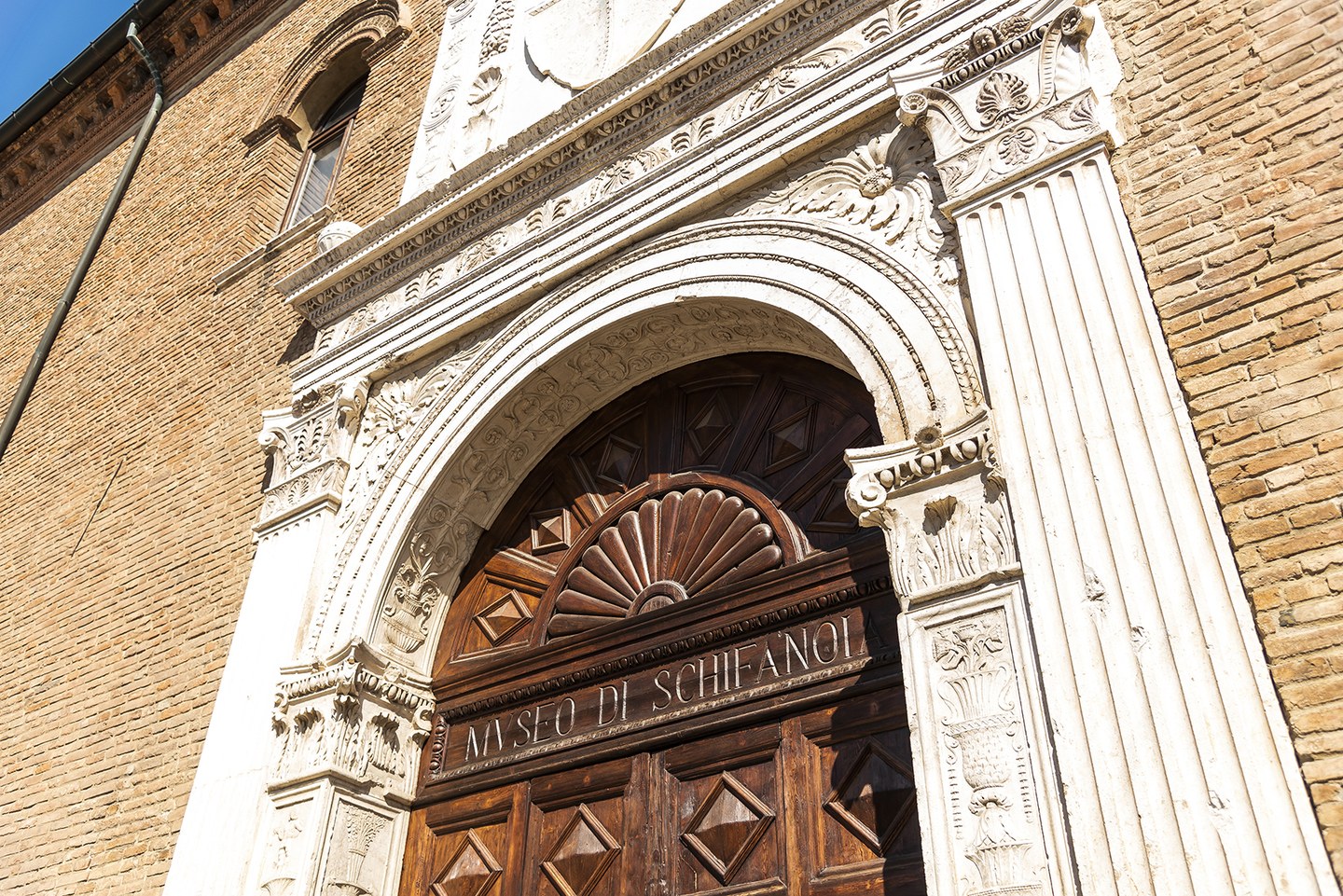
5 MINUTES OF ART - Palazzo Schifanoia
Inside Palazzo Schifanoia, visitors can admire the Salone dei Mesi (Hall of the Months), one of the most important fresco cycles by the "Officina Ferrarese" and one of the most significant examples of Renaissance art in the Este family.
Step 8
Palazzina Marfisa d'Este
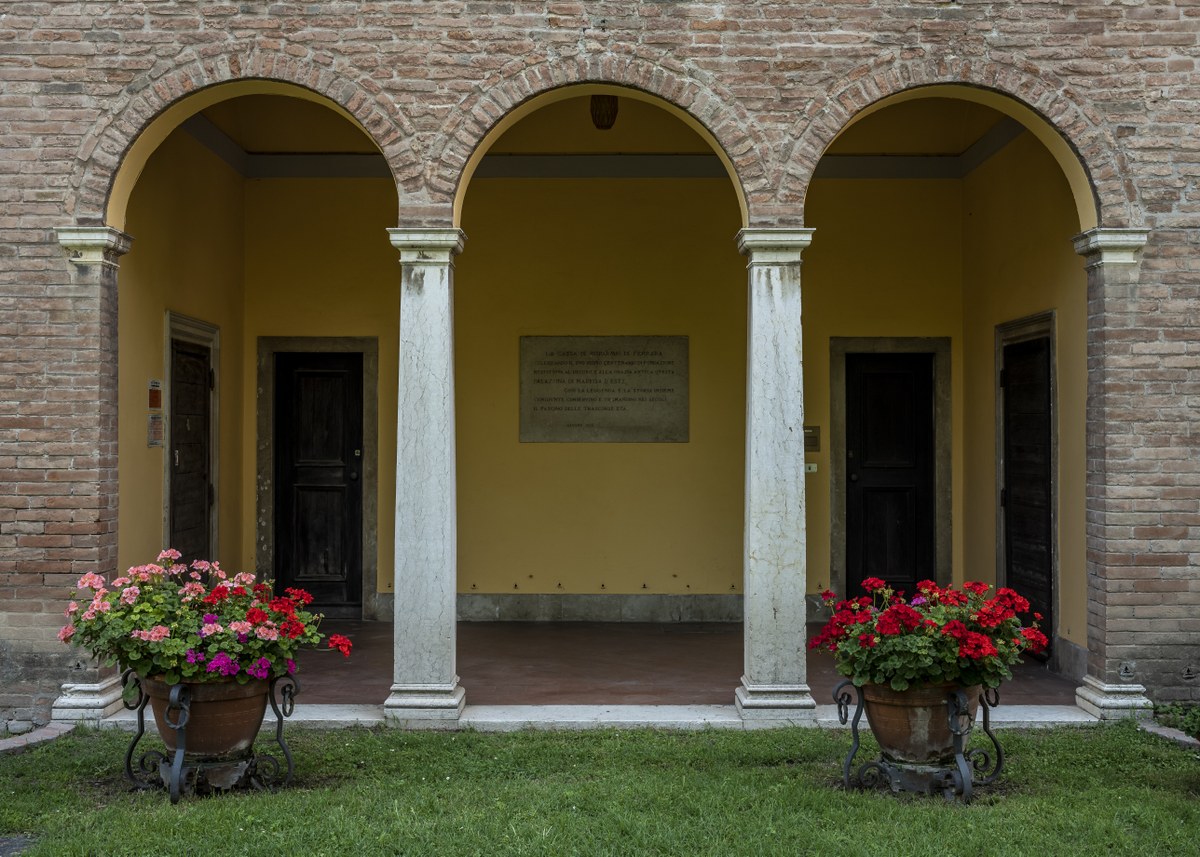
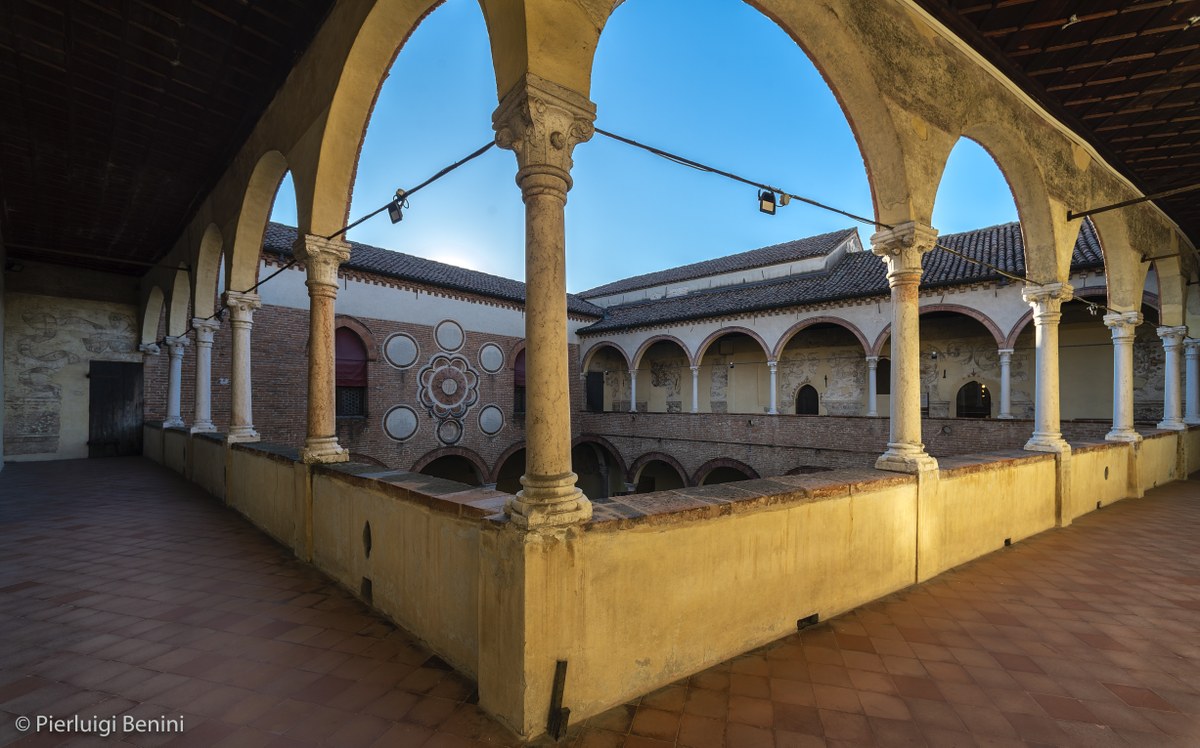
It is a magnificent example of a 16th-century stately home, once surrounded by beautiful gardens. Built by Francesco d'Este, the building was part of a larger complex of buildings, connect together by a garden that no yet exists.
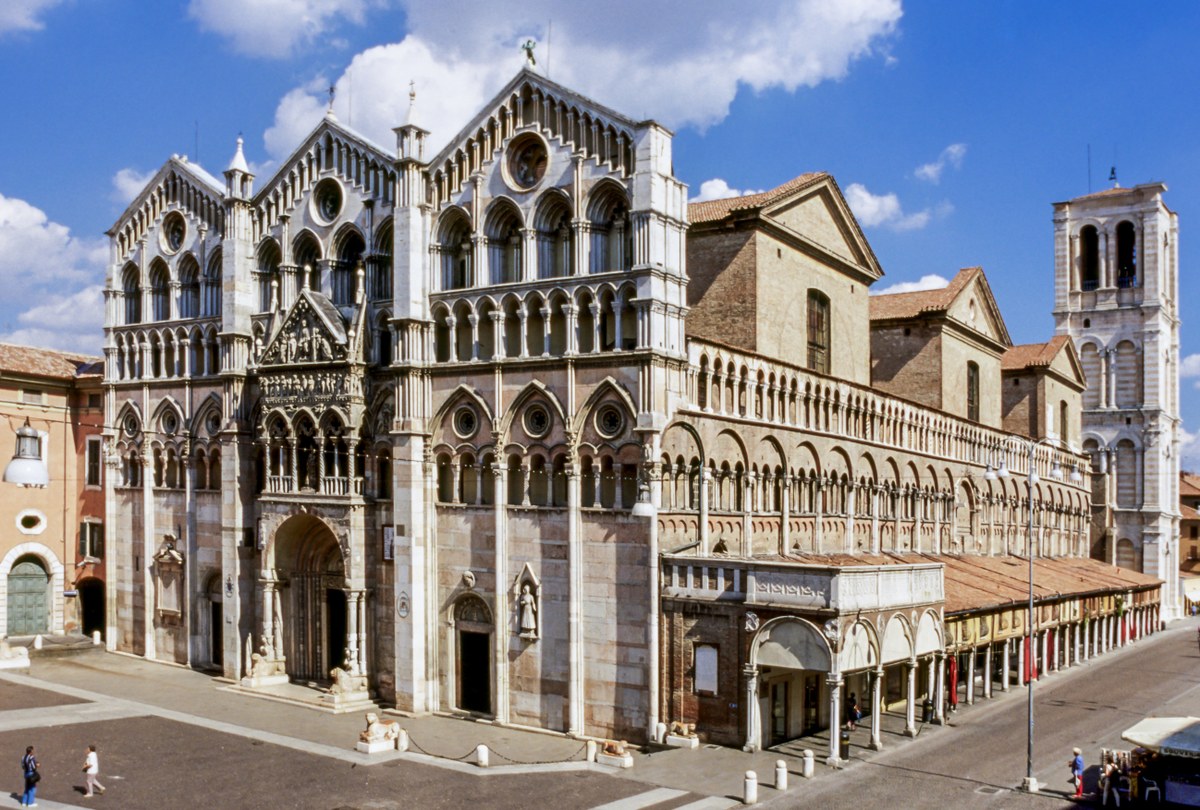
The interior of the cathedral is an explosion of classic Baroque and Renaissance splendor, the result of successive renovations that affected the apse (16th century), the transept (17th century), and the naves (18th century).
The result is a harmonious and sumptuous space, with gilded stuccoes, monumental frescoes, and precious sculptures
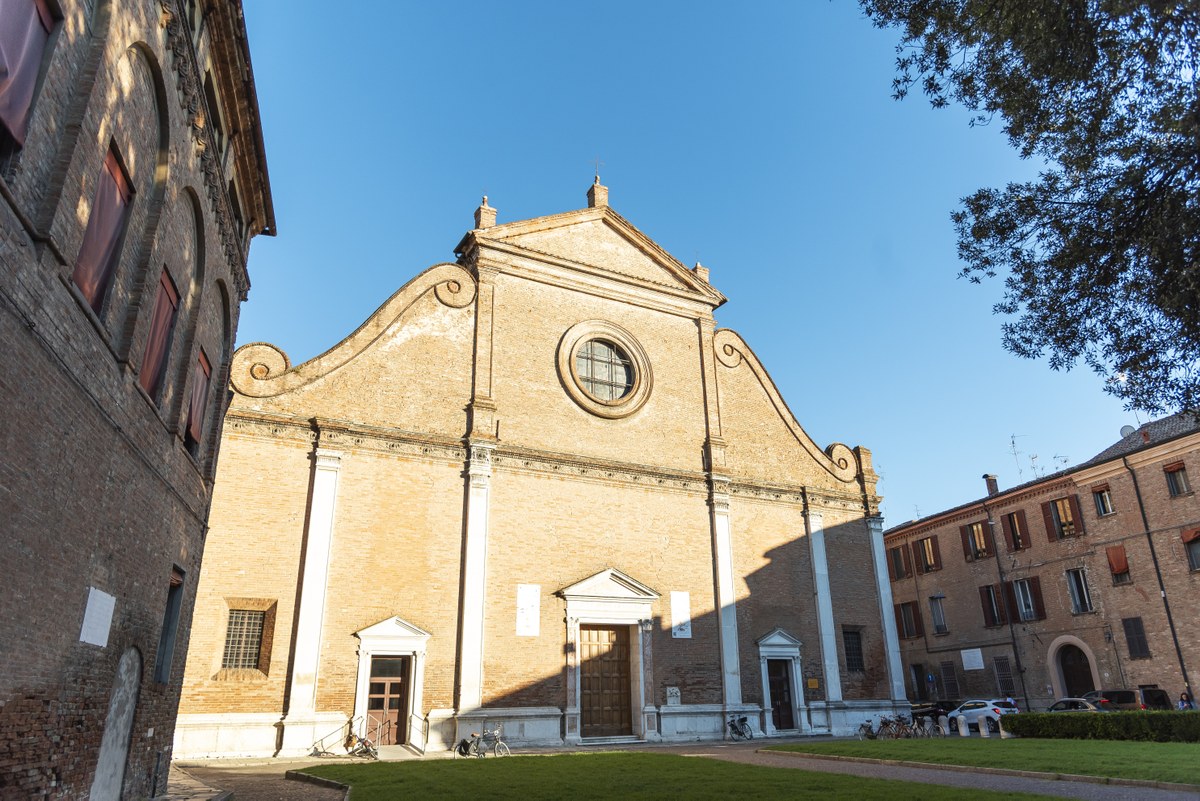
The current church is the third to be built on this site, where Franciscans settled as early as the 13th century. It was build by Biagio Rossetti starting from 1494.
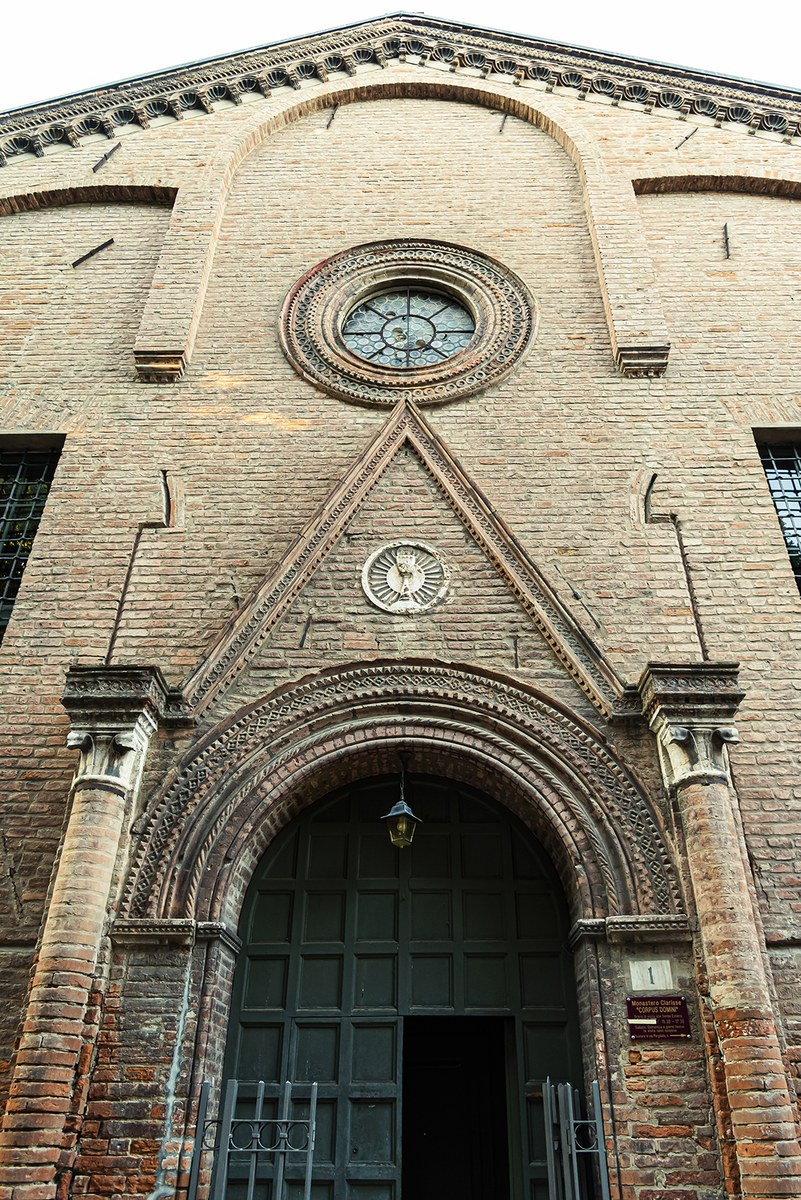
The cloistered monastery of the Clarisse nuns, is famous beacouse inside there are the tombs of several members of the d'Este family, such as Lucrezia Borgia.
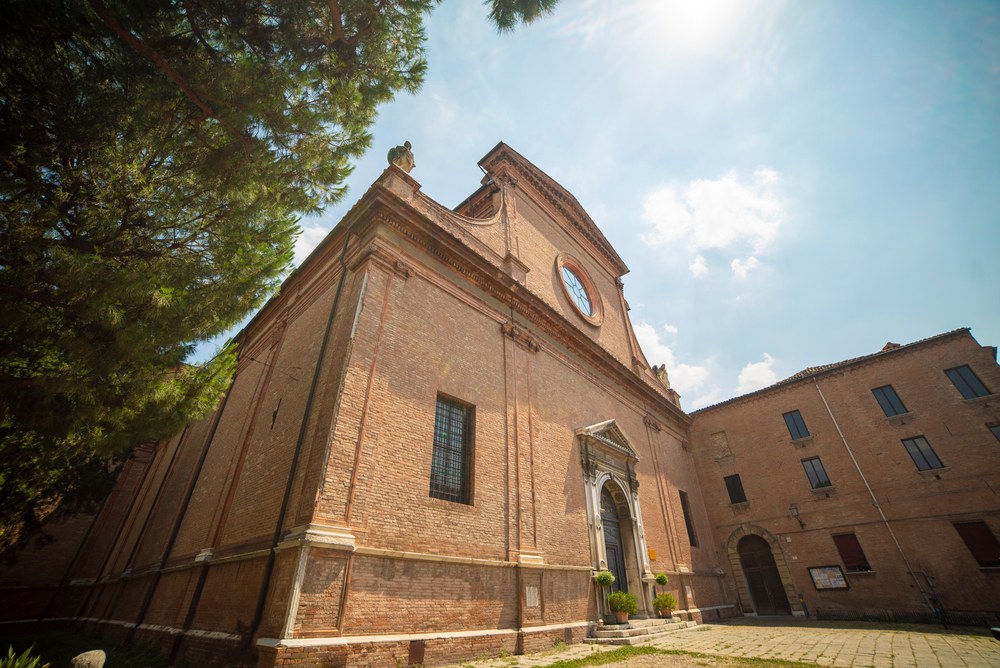
Very ancien church, in 1171, a miraculous event took place there: at the moment of consecration, drops of blood spurted from the Host and fell on the vault of what was then a small temple.
It was built outside the ancient walls at the behest of Alberto V d'Este in 1385 and was later transformed
and enlarged, especially during the reign of Borso. The most famous and interesting room is the Sala dei Mesi (Hall of the Months), a collective work by several Ferrara painters from the school of Cosmè Tura, including Francesco del Cossa and Ercole de' Roberti.
It is a magnificent example of a 16th-century stately home, once surrounded by beautiful gardens. Built by Francesco d'Este, the building was part of a larger complex of buildings, connect together by a garden that no yet exists.
The interior of the cathedral is an explosion of classic Baroque and Renaissance splendor, the result of successive renovations that affected the apse (16th century), the transept (17th century), and the naves (18th century).
The result is a harmonious and sumptuous space, with gilded stuccoes, monumental frescoes, and precious sculptures
The current church is the third to be built on this site, where Franciscans settled as early as the 13th century. It was build by Biagio Rossetti starting from 1494.
The cloistered monastery of the Clarisse nuns, is famous beacouse inside there are the tombs of several members of the d'Este family, such as Lucrezia Borgia.
Very ancien church, in 1171, a miraculous event took place there: at the moment of consecration, drops of blood spurted from the Host and fell on the vault of what was then a small temple.
It was built outside the ancient walls at the behest of Alberto V d'Este in 1385 and was later transformed
and enlarged, especially during the reign of Borso. The most famous and interesting room is the Sala dei Mesi (Hall of the Months), a collective work by several Ferrara painters from the school of Cosmè Tura, including Francesco del Cossa and Ercole de' Roberti.
It is a magnificent example of a 16th-century stately home, once surrounded by beautiful gardens. Built by Francesco d'Este, the building was part of a larger complex of buildings, connect together by a garden that no yet exists.