L'Airone, published in 1968, is a novel by Giorgio Bassani, which won the Campiello Prize in 1969. The story describes a winter Sunday in 1947, when the protagonist decided to spend the day hunting. However, overwhelmed by a sense of unease and dissatisfaction, he finds himself on a dramatic inner journey.
Sito ufficiale di informazione turistica della provincia di Ferrara
EN
L'Airone (The Heron), by Giorgio Bassani
L'Airone (The Heron), by Giorgio Bassani
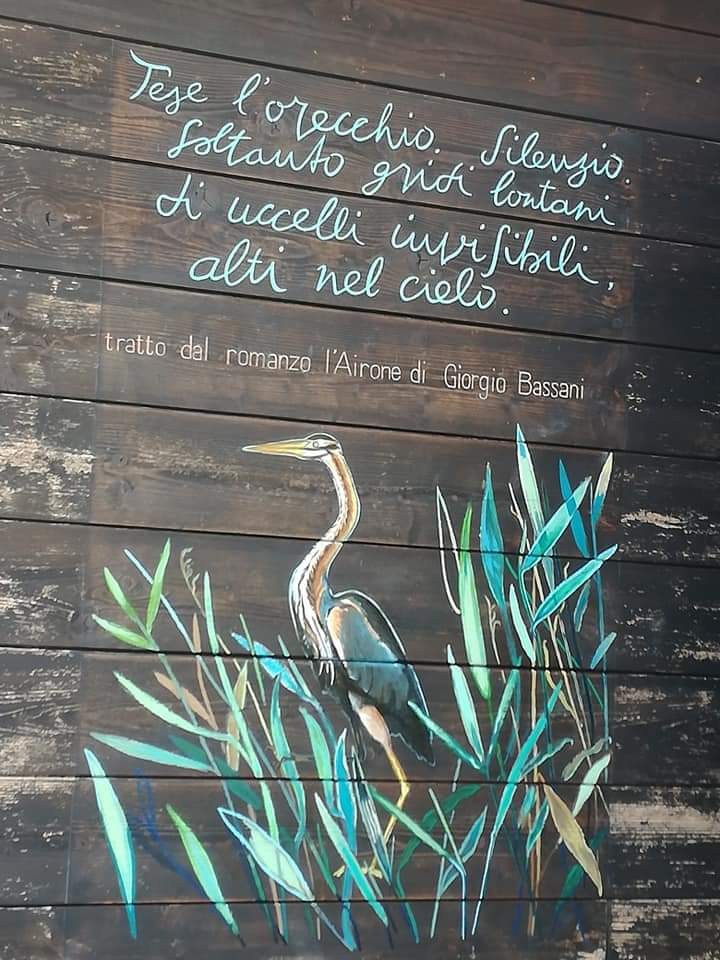
First Step: Oasi Garzaia, Via per Ferrara
MURALS - Reading, page 797
“He strained his ear. Silence. Only distant cries of unseen birds, others in the sky.”
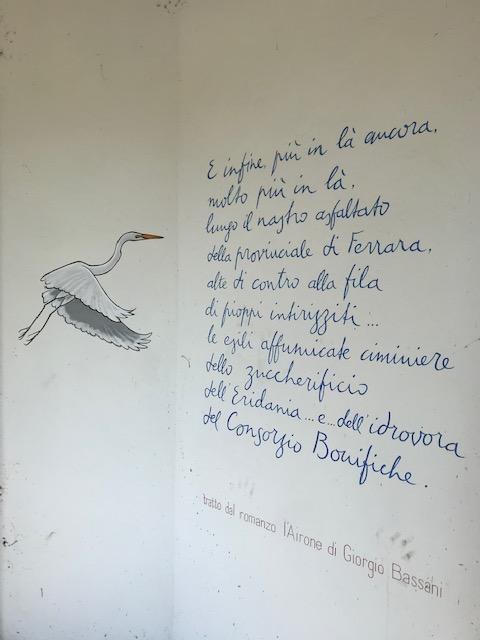
Second Step: Stabilimenti Idrovori, Via per Ferrara
MURAL – Reading, p. 767
“And finally still farther on, much farther on, along the asphalt ribbon of the provincial road to Ferrara, rising opposite the row of aligned poplars … the slender, smoke-stained chimneys of the Eridania sugar factory … and … of the drainage pumping station of the Land Reclamation Consortium.”
Third Step: Viale Papa Giovanni XXIII
MURAL – Reading, pp. 813–814
“The heron dropped lower still. By now its legs, thin as sticks, stretched backward, were clearly visible. The large pointed beak, the reptilian head. Suddenly, however, … it rolled onto its back and, regaining altitude, within a few seconds vanished in the direction of the bell tower of Pomposa.”
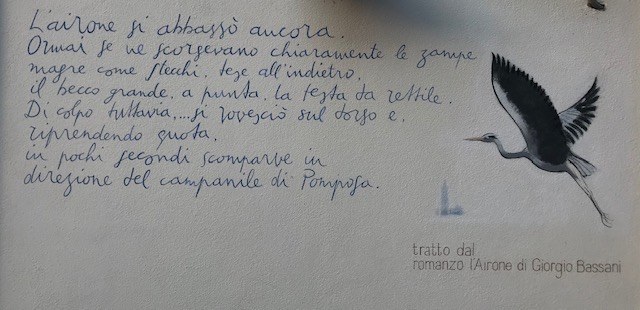
Fourth Step: Town Hall, P.zza Matteotti
MURAL – Reading, pp. 778–779
“And there it was: the square, the Church of Santa Maria Ausiliatrice on one side, on the other the red façade of the Chamber of Labour, set between the now brightly lit shop windows of the two cafés.”
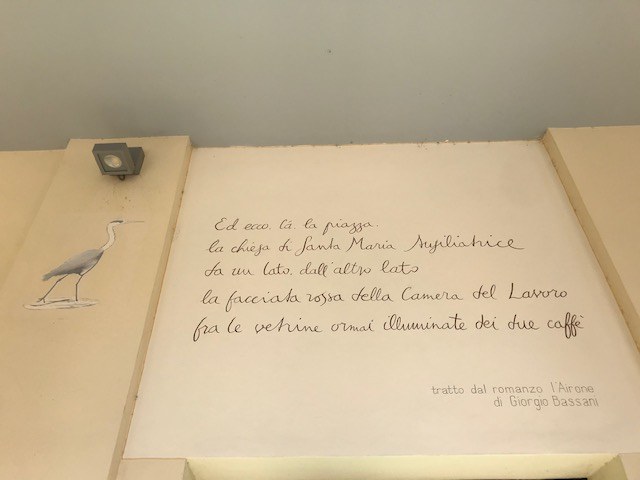
Fifth Step: Tower in P.tta Po
MURAL – Reading, pp. 793–794
“To step out of the (telephone) booth and think that in the lagoon he would find everything he needed: serenity, physical and mental well-being, joy of living …”
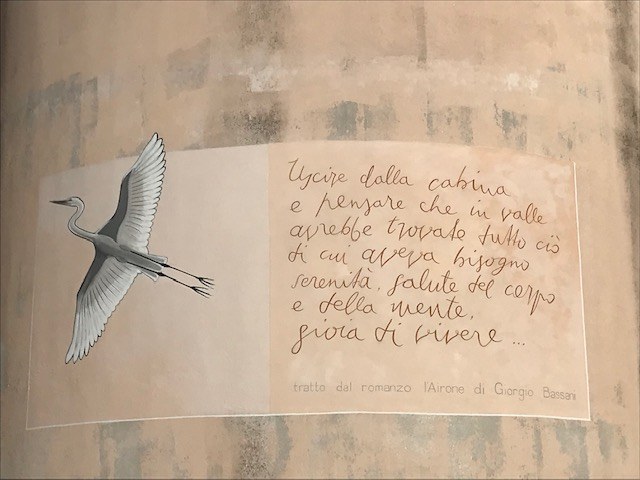
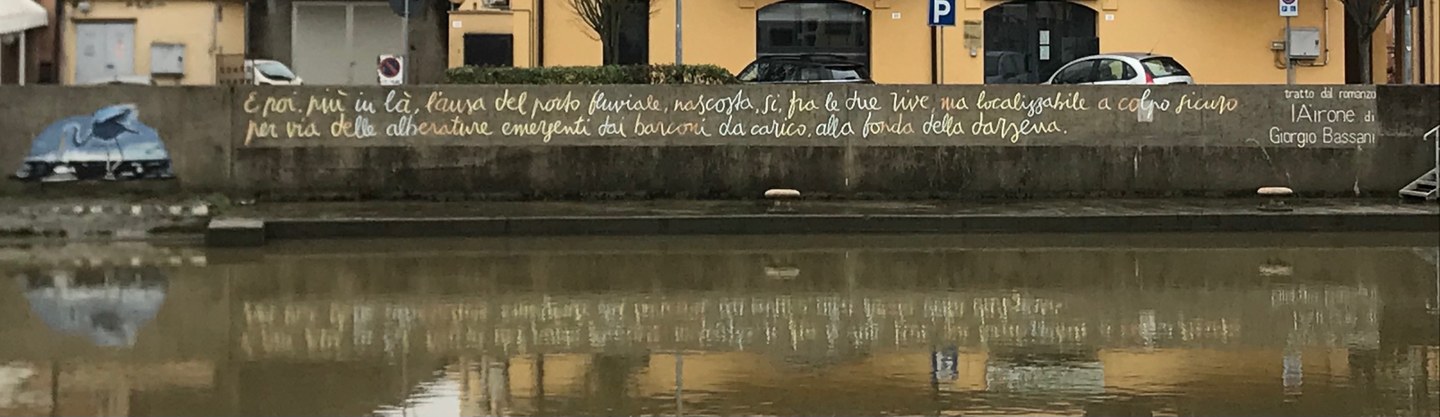
Sixth Step: Riviera Po di Volano
MURAL – Reading, p. 779
“And then, farther on, the bend of the river port—hidden, between the two banks, yet unmistakably identifiable at a glance by the trees rising from the moored cargo barges, anchored in the dock.”
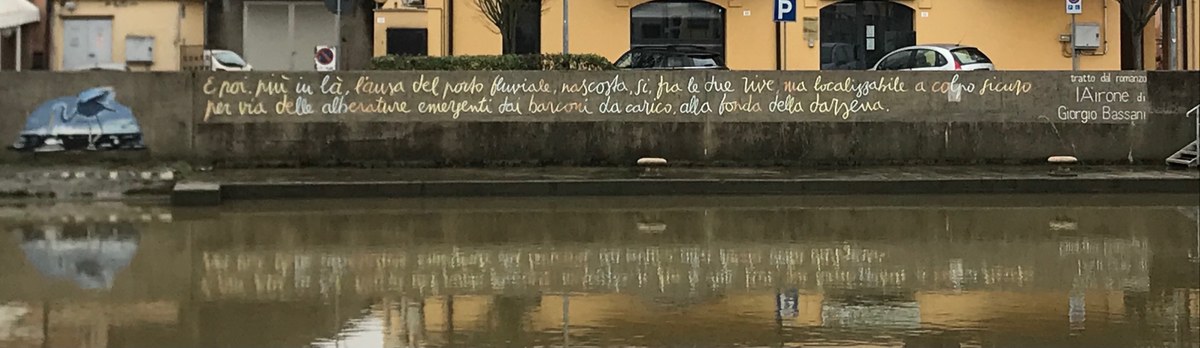
Seventh Step: Ex Scuole Elementari Riviera Cavallotti
MURAL – Reading, p. 869
“He walked briskly, determined not to turn his eyes toward the cargo barges and the lighters lined up, as in the morning, along the bank of the river port.”
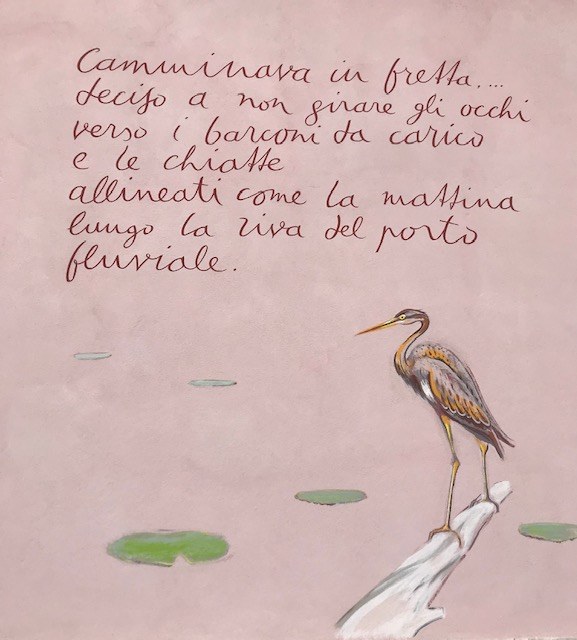
Eigtht Step: Ex Scuole Elementari Riviera Cavallotti
MURAL – Reading, p. 870
“But as soon as he sensed beside him the presence of those motionless forms, … he could not resist the temptation to stop and look at them.”
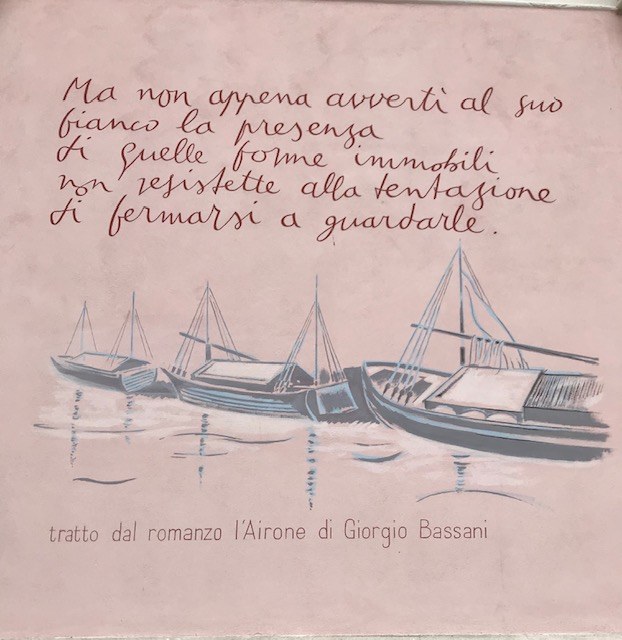
Nineth Step: Ex Scuole Elementari Riviera Cavallotti
MURAL – Reading, pp. 872–873
“One after another he walked along several streets: insignificant little lanes, flanked by the small single-storey houses of the oldest quarter. He met no one. From the cracks of the closed shutters filtered the reddish light of poor families. Nothing could be heard except the occasional sound of a radio.”
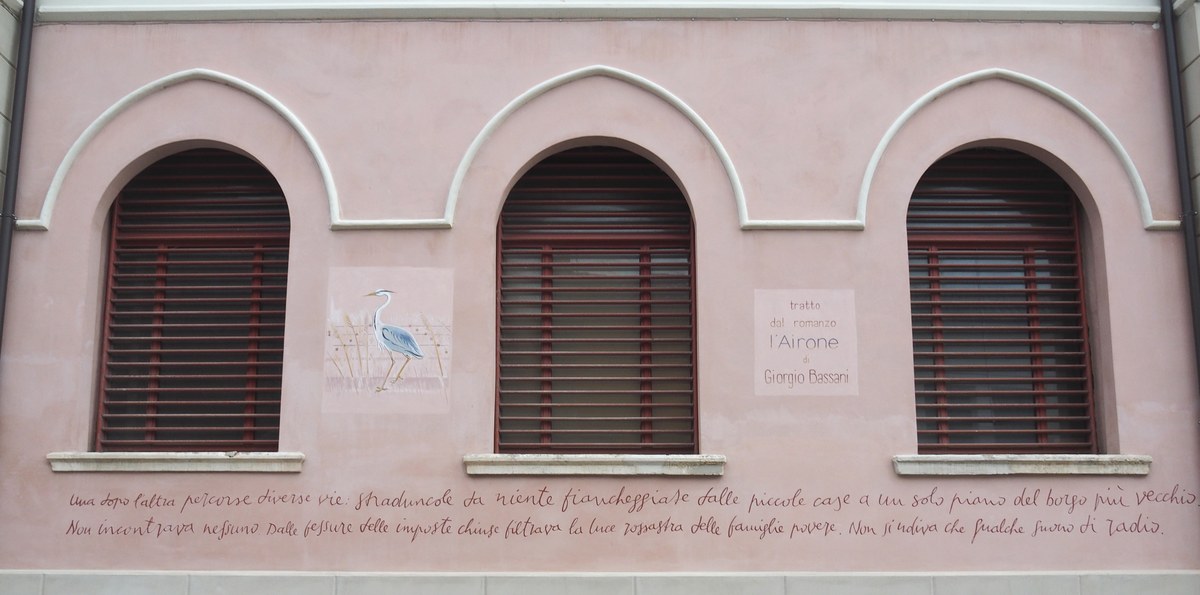
Tenth Step: Vescovo Palace, Riviera Cavallotti, Via Rosario
MURAL – Reading, p. 871
“It was an ancient noble palazzo with a Venetian air, with that fine façade overlooking the canal. Thus, toward midday …”
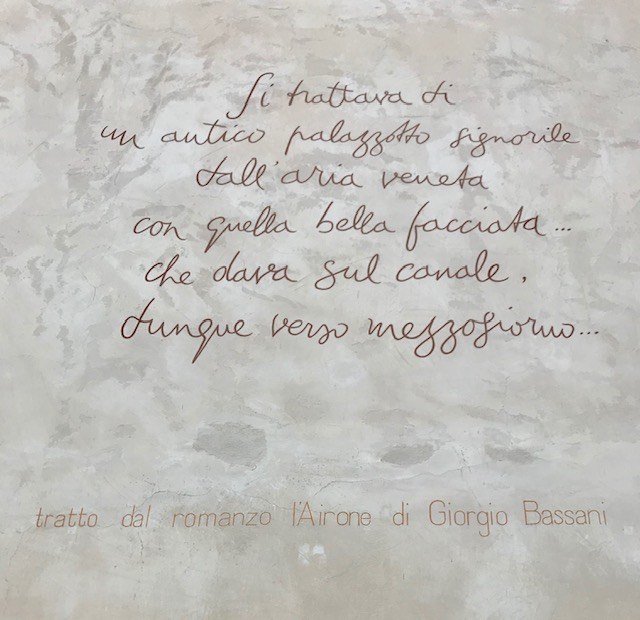
Eleventh Step: IAT Palace, Tourist information office Abbazia di Pomposa
MURAL – Reading, p. 871
“Yet he was happy nonetheless: happy that the abbey had come through the war preserving intact its original appearance as a large agricultural estate … with that bell tower on one side, capacious like a grain silo; with that church in the middle which, more than a church, brought to mind a barn …”
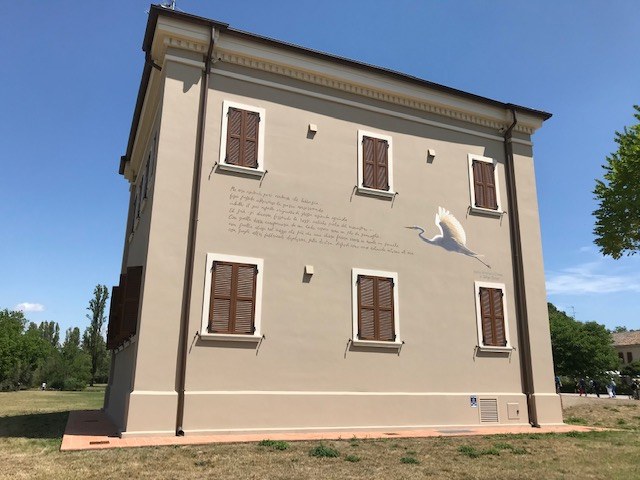
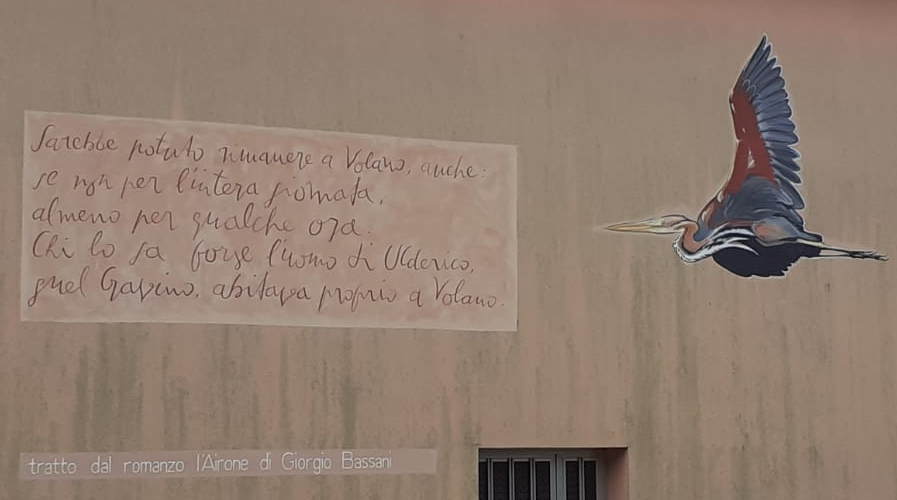
Twelveth Step: Gavino’s House, Volano village
MURAL – Reading, p. 798
“He could have stayed in Volano as well: if not for the entire day, at least for a few hours. Who knows—perhaps Ulderico’s man, that Gavino, actually lived in Volano.”