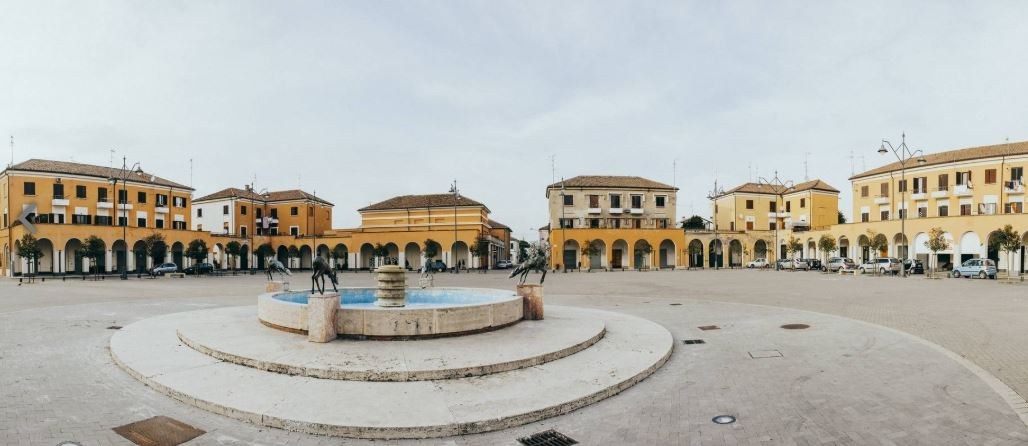
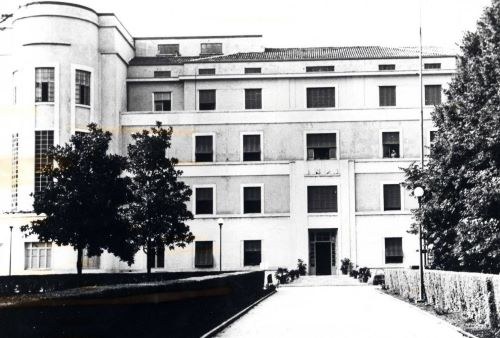
At first, Tresigallo was a small rural village of 900 people. It came to its splendour between 1933 and 1939, when citizen E. Rossoni became Minister in 1935 and restored the town. His utopian idea was a place where employers and employees could cooperate. As opposed to the rest of the new towns built during Fascism, Tresigallo had many public services, such as an embroidery school, an aqueduct, a kindergarten and elementary school and a gym.
Sito ufficiale di informazione turistica della provincia di Ferrara
EN
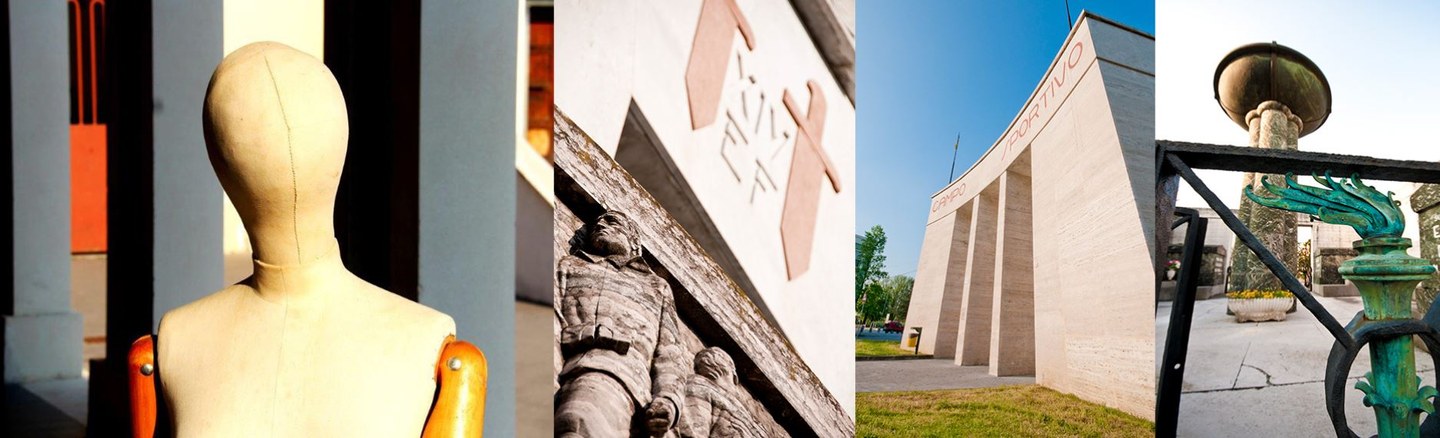
Tresigallo, metaphisycal city
City of the 20th century and small centre of Rationalism
Starting point from
Former House G.I.L. / House of the culture
Length
2 hours
Suitable for
Everyone
Tresigallo is the well made attempt at building an innovative architectural reality.
In the green ferrarese plain between Ferrara and the Comacchio Lagoons, the utopian and ideal city of Tresigallo takes shape. Colorful buildings, towers, marble porticos, cylinders, cones, parallelepipeds, arches that fade into the horizon: walking in these places is a one of a kind, fascinating experience. The silence that envelops the landscape, interrupted only by the sound of the water flowing from the fountain, projects us into a dimension that hangs between geometry and dream.
Visitors are fascinated by the polychromy of the town's rationalist architecture: warm and cool colours that project to a different dimension, very different from the other cities in Ferrara's area and Pianura Padana. Tresigallo becomes a play of symmetries, overlapping spaces, elaborated harmonies: it is the result of the work of anonymous construction workers, carpenters, glass makers, marble sculptors, engineers, surveyors and artists people know very little about, like Pietro Porcinai (garden architect), Ugo Tarchi (engineer), Giorgio Baroni (who experimented the innovative use of reinforced concrete on the roof of the M.A.L.I.C.A warehouse).
There is an estranged and metaphysical dimension in Tresigallo, a sort of stillness caused by the fact that the urban and architectural language has not been changed throughout time: Tresigallo was born and died with its builders, frozen in its evolution, stuck in 1940.
Edmondo Rossoni, Minister of Agriculture and Woods
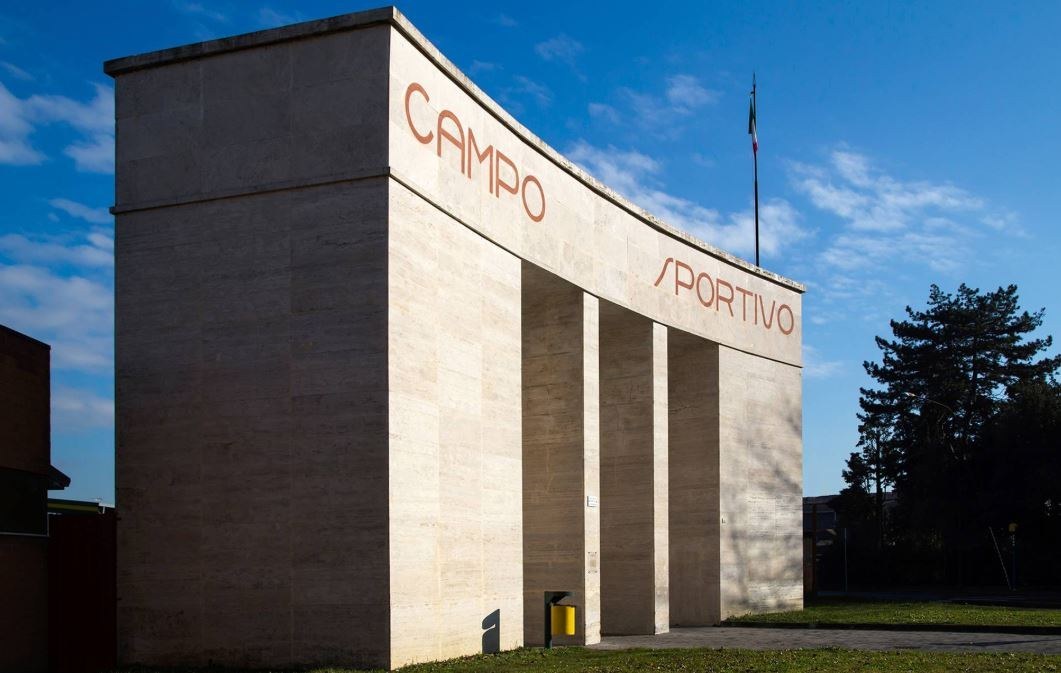
Step 1
Bagni | Urban Center
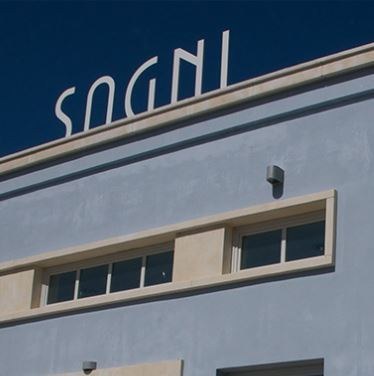
The building was used for a few years but then abandoned. Today it is called Sogni (“Dreams”) as it hosts ideas for start ups, exhibitions, conventions and events.