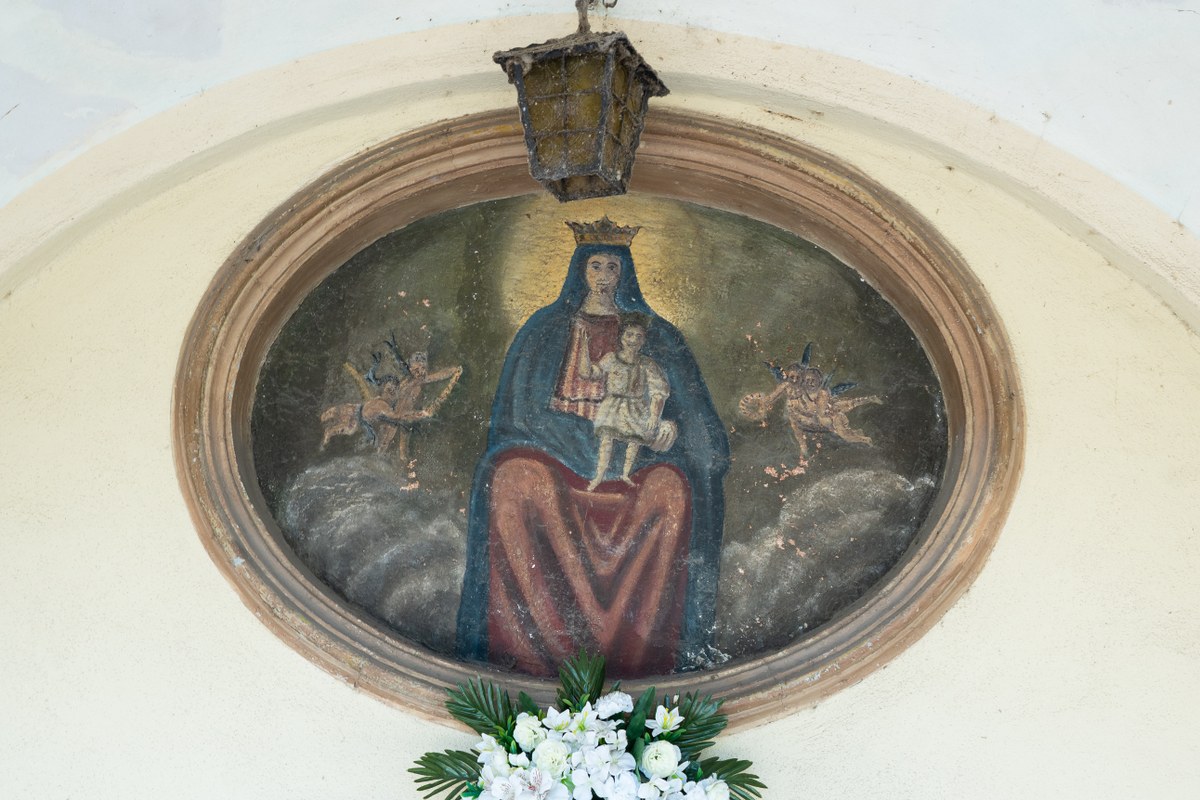
Corso G. Garibaldi, 97
The usual iconography of Santa Maria in Aula Regia is interpreted with a certain expressive freedom. The frontal composition is enlivened by the drapery of the Madonna's robes as she holds the Child, who is depicted standing.
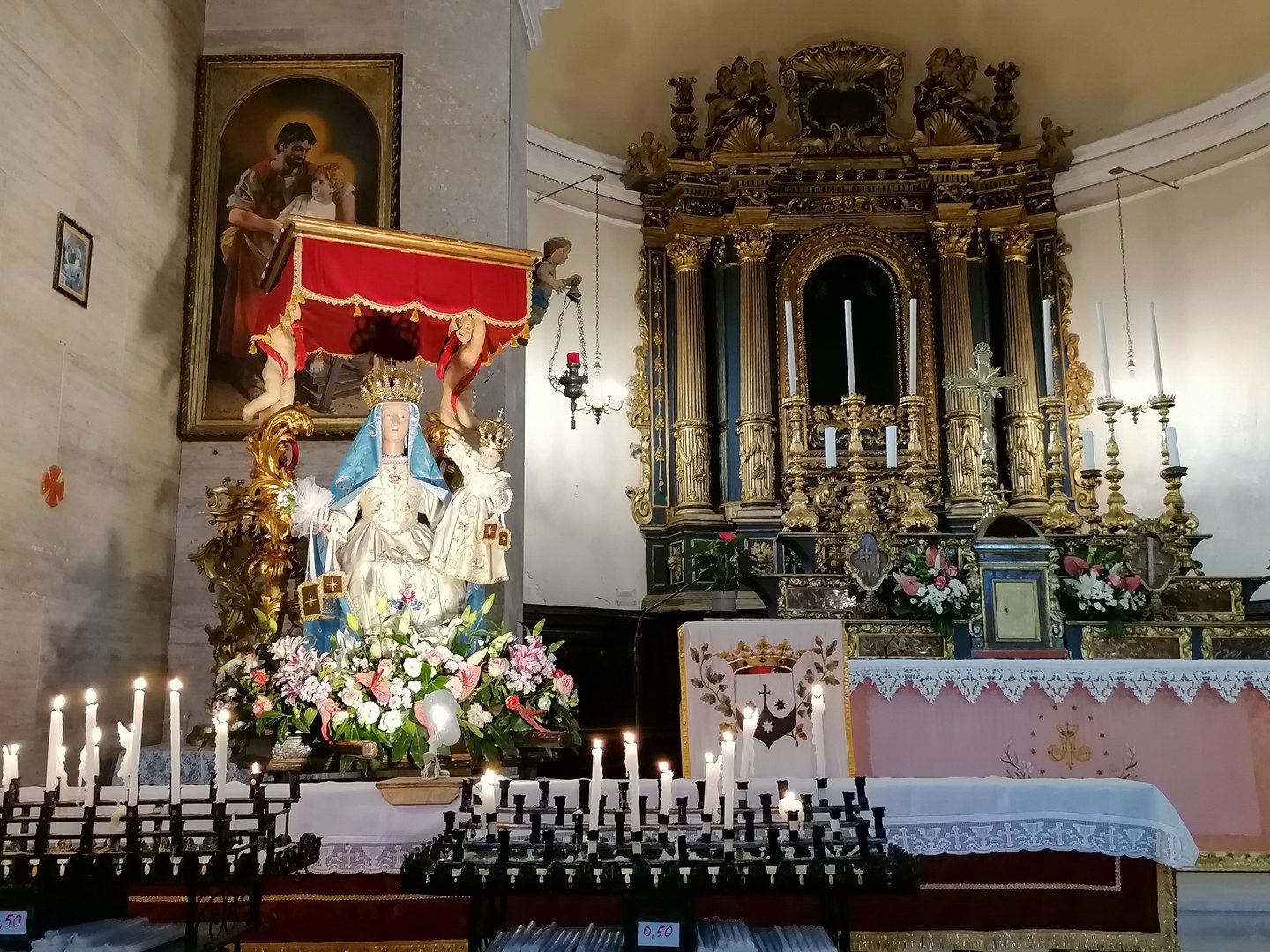
Today, there are thirteen particularly significant images, distributed between Corso Garibaldi and Corso Mazzini: a route that ideally connects the heart of the city to the sanctuary of Santa Maria in Aula Regia, combining art, history, and spirituality
Corso G. Garibaldi, 97
The usual iconography of Santa Maria in Aula Regia is interpreted with a certain expressive freedom. The frontal composition is enlivened by the drapery of the Madonna's robes as she holds the Child, who is depicted standing.
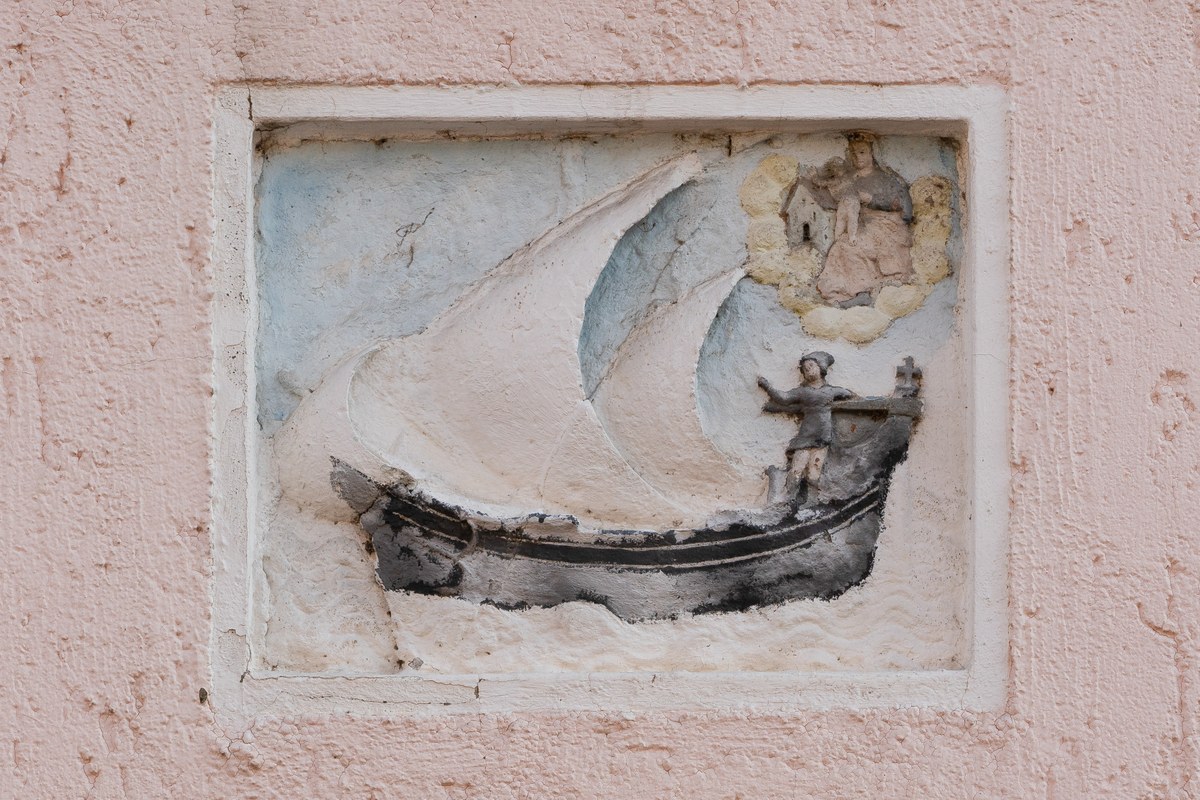
Corso G. Garibaldi, 95
The only example of an ex voto, unusually located outdoors, is placed on the facade of the house of a Comacchio boatman and commemorates the grace received for a rescue. The boat is depicted during a storm at sea, with its sails billowing in the fierce wind. The sailor at the helm invokes the help of the Madonna. She appears to him in the clouds of the sky together with the Child who, with his hand on the man's house, assures him of protection and the certainty of his return.
Corso G. Garibaldi, 78
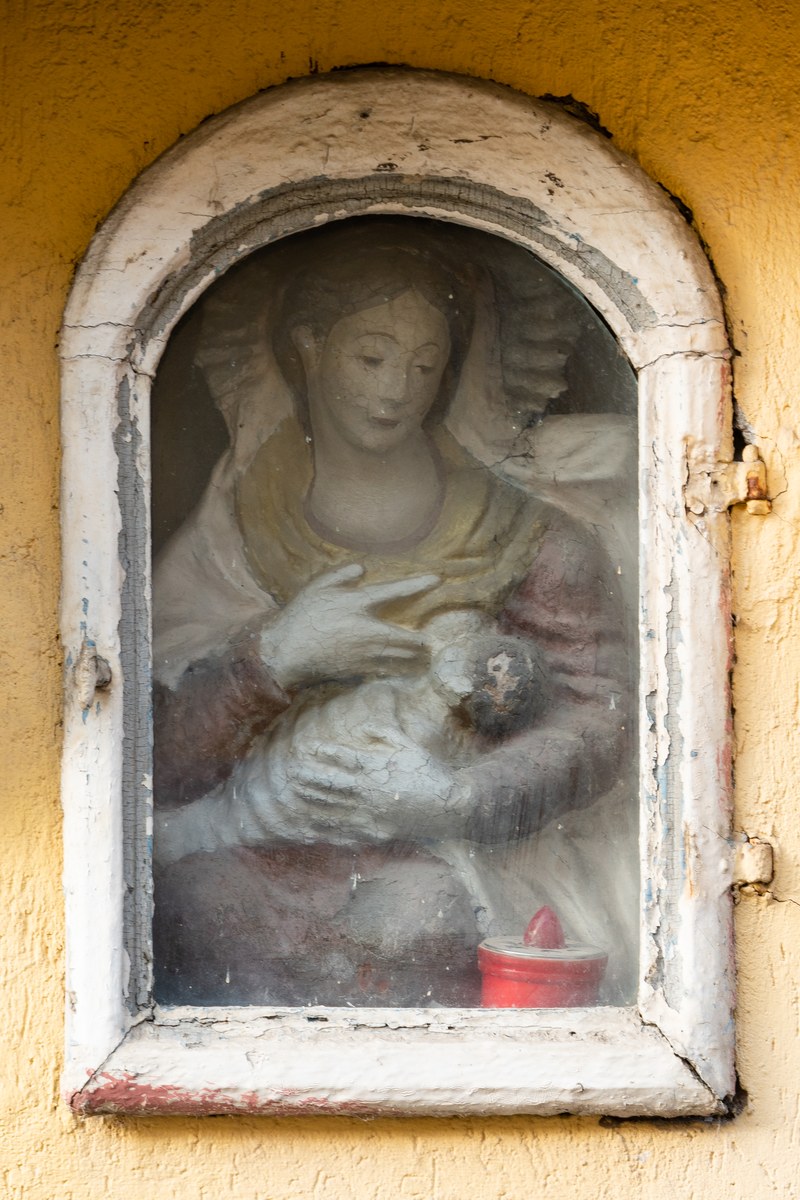
It is located above the entrance to one of the many alleys that connect the public road to the areas behind it, where there used to be meadows used for pulling boats ashore. This image depicts the Madonna del Latte, to whom women with breastfeeding difficulties turned. The iconography, inspired by a print by Agostino Carracci, was accompanied by a small lamp that illuminated the niche and lit up the street.
Corso G. Garibaldi, 61
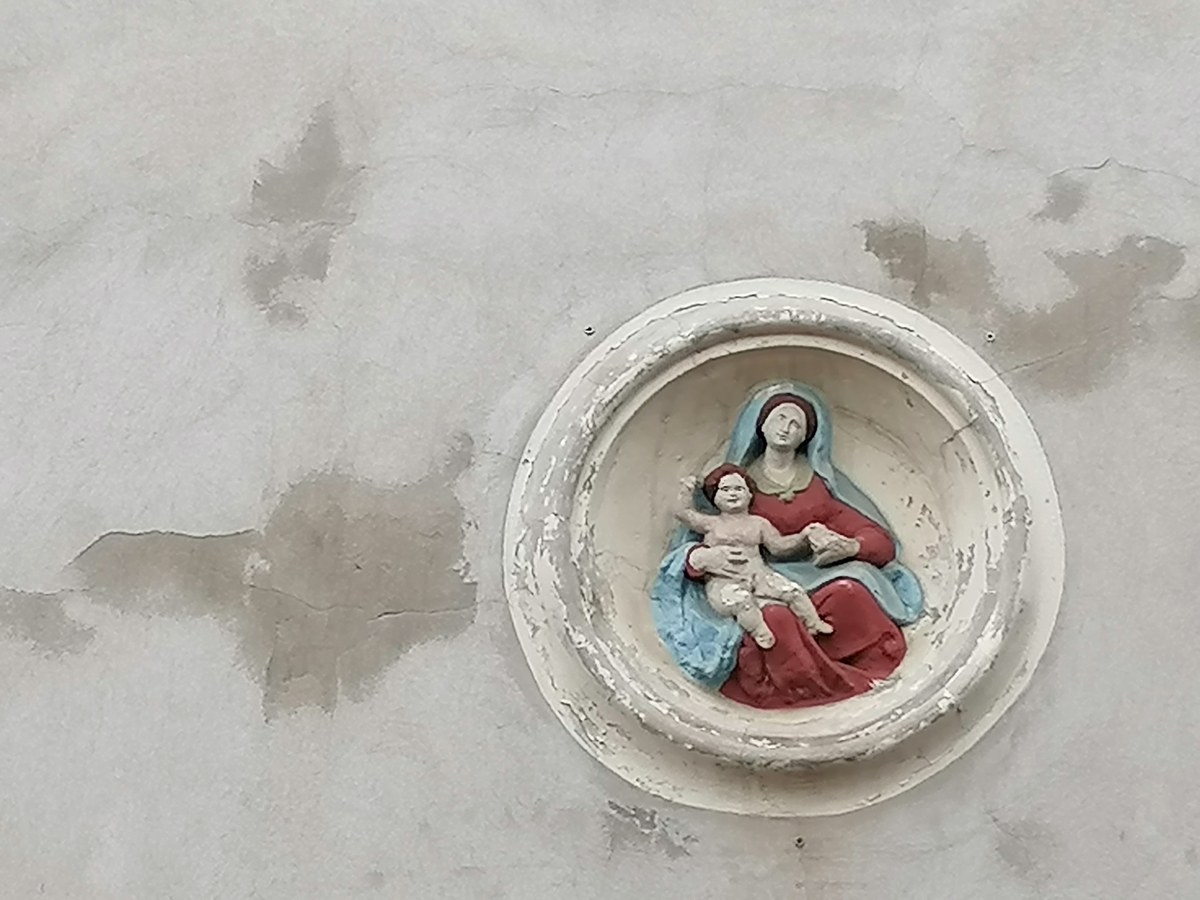
Relief obtained on the concave bottom of a terracotta basin embedded in the masonry above the entrance to an alleyway “segue la numerazione” The name derives from the name of the owner of the house. The figurative layout of the Madonna and Child recalls the stylistic forms of the statue placed in the clock tower, with the Child positioned on the left.
Vicolo delle Aragoste – già Androna dei Gomitoli
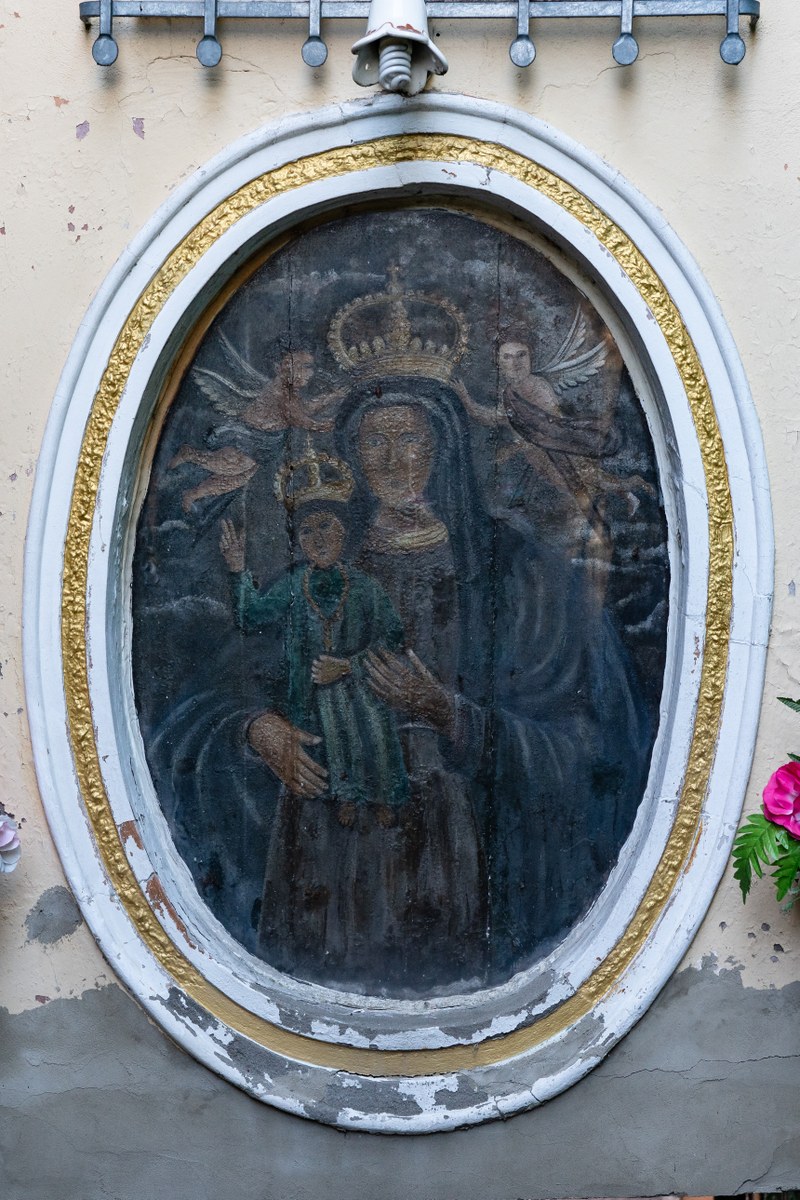
The oval is inserted on the front of a portico (altana) in the middle of an alley, a kind of large courtyard where women used to meet to knit or make fishing nets. The image refers to the cult of St. Mary in the Aula Regia, but with the iconographic variations of the Child placed on the left and the royal-style crowns.
Via Gramsci - già Via Isola, 8
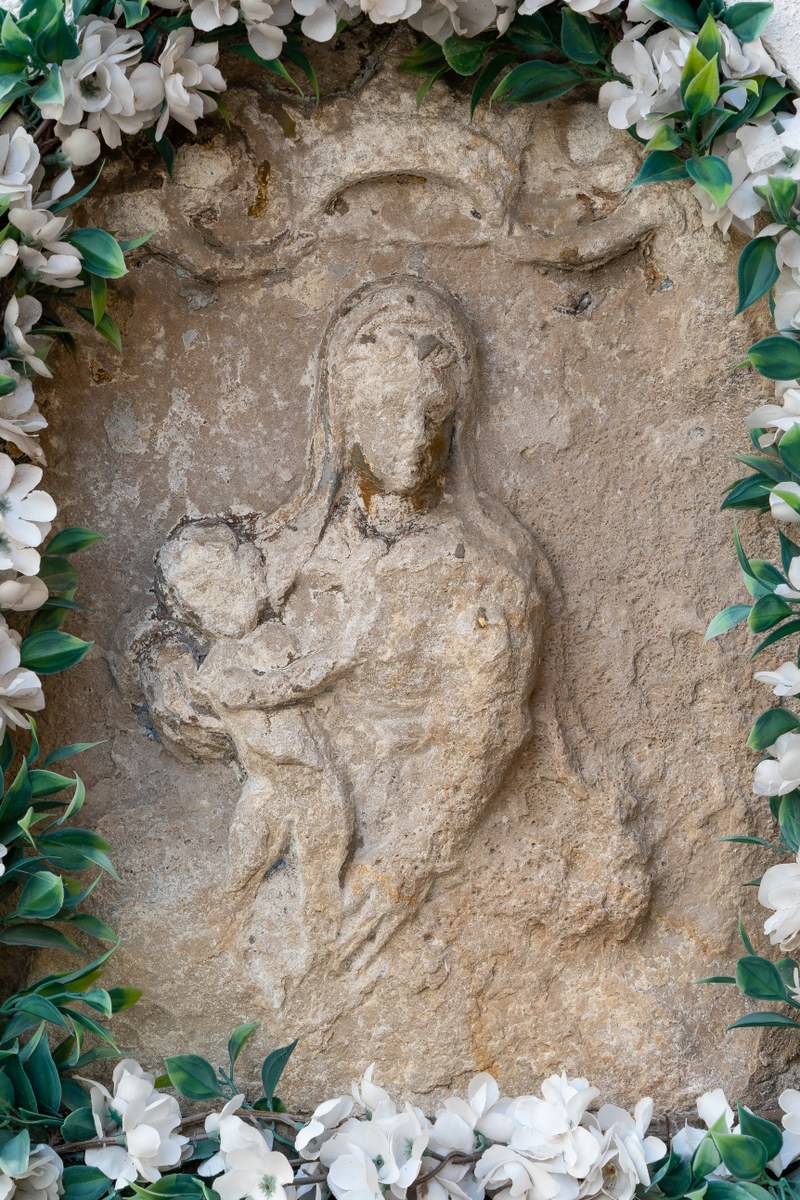
Set in a frameless arched niche on the wall that breaks the continuity of the street at a right angle, it depicts a Madonna with Child held in her right arm. In the upper part, angels hold up a crown.
Piazza Folegatti, 32
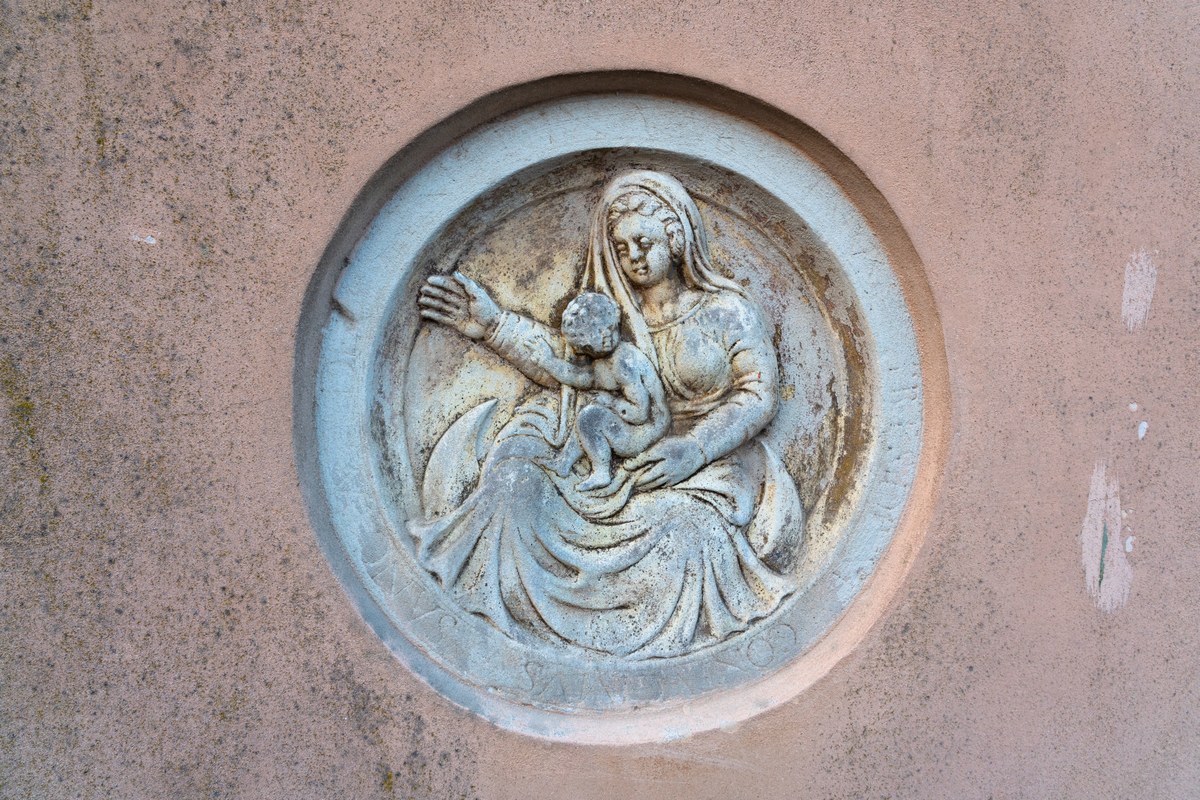
Now incorporated into the facade of the old town hall, it was once located on the base of the clock tower. It is a reinterpretation of a 16th-century iconographic theme, lacking the figure of Saint John, to whom the Virgin and Child were gesturing to offer bouquets of roses. The raised hand of the Child becomes a blessing, and that of the Madonna, disproportionately large, takes on the symbol of Providence.
Piazza Folegatti, 2
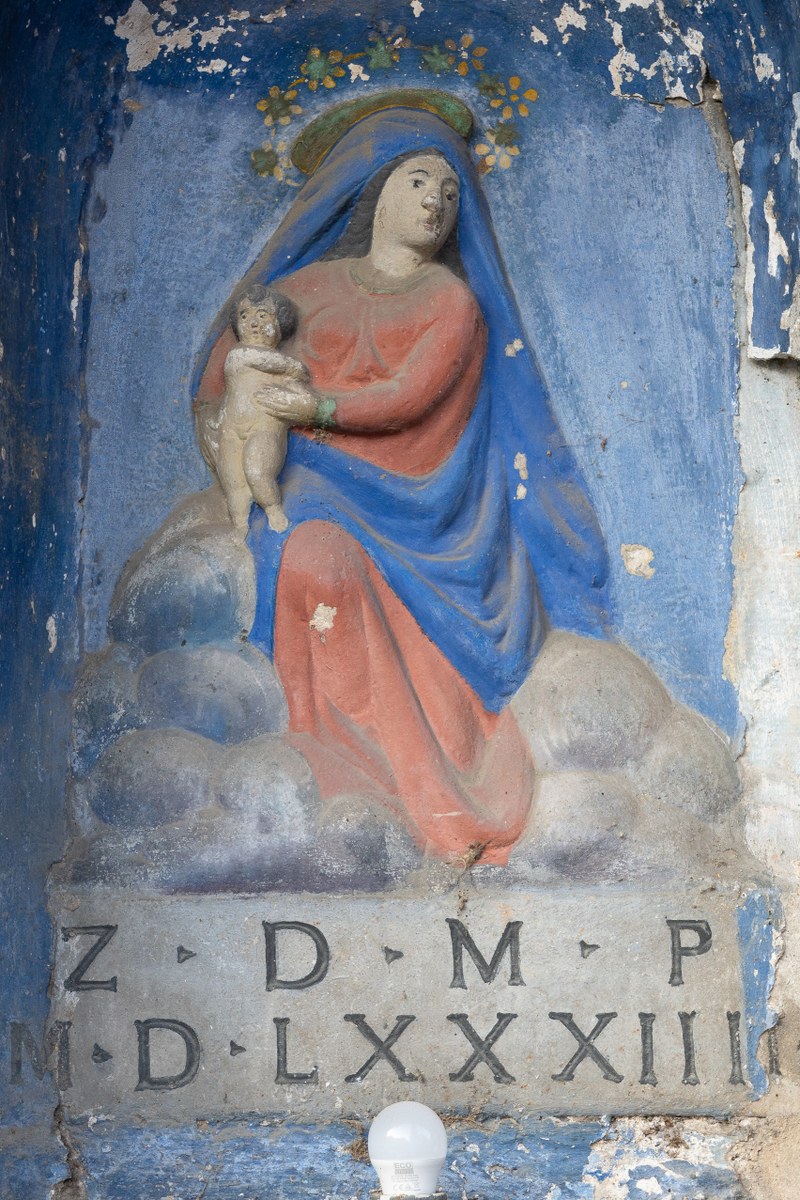
The image is placed in a niche with a large Istrian stone frame. At the base of the frame, the letters ZDMP have been interpreted as Zarattini Dionigio Monumentum Posuit, given the particular Marian devotion and considerable financial resources of the Zarattini family, who wanted to place it on their home. According to oral tradition, the Madonna was the protector of boatmen and labourers.
Piazzetta dei Barboncini, 2
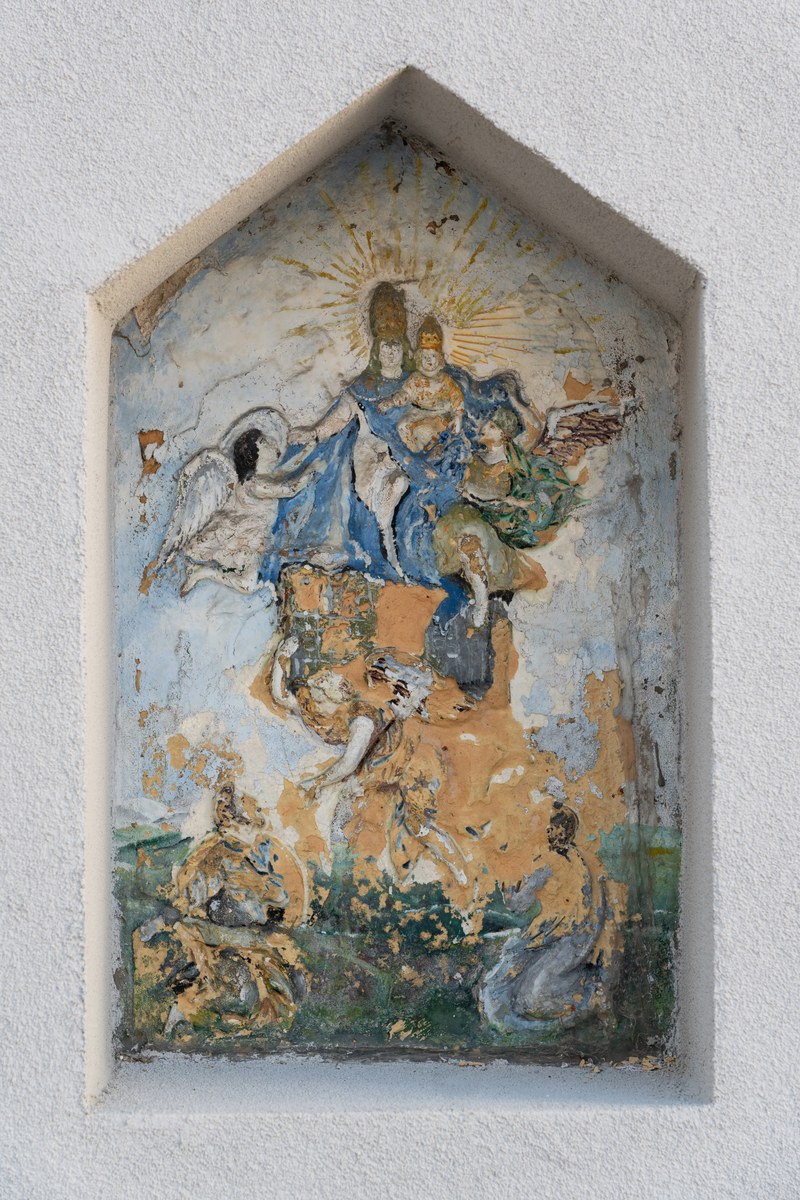
The niche, with a gabled profile, contains an image with evocative iconography: the miraculous discovery of the statue of St. Mary in the Aula Regia in the Comacchio lagoons, which arrived from the sea in a basket carried by angels. A symbolic composition that recalls the Marian themes of the Assumption and the Translation of the Holy House of Loreto, often adapted to local cults.
Corso G. Mazzini, 44
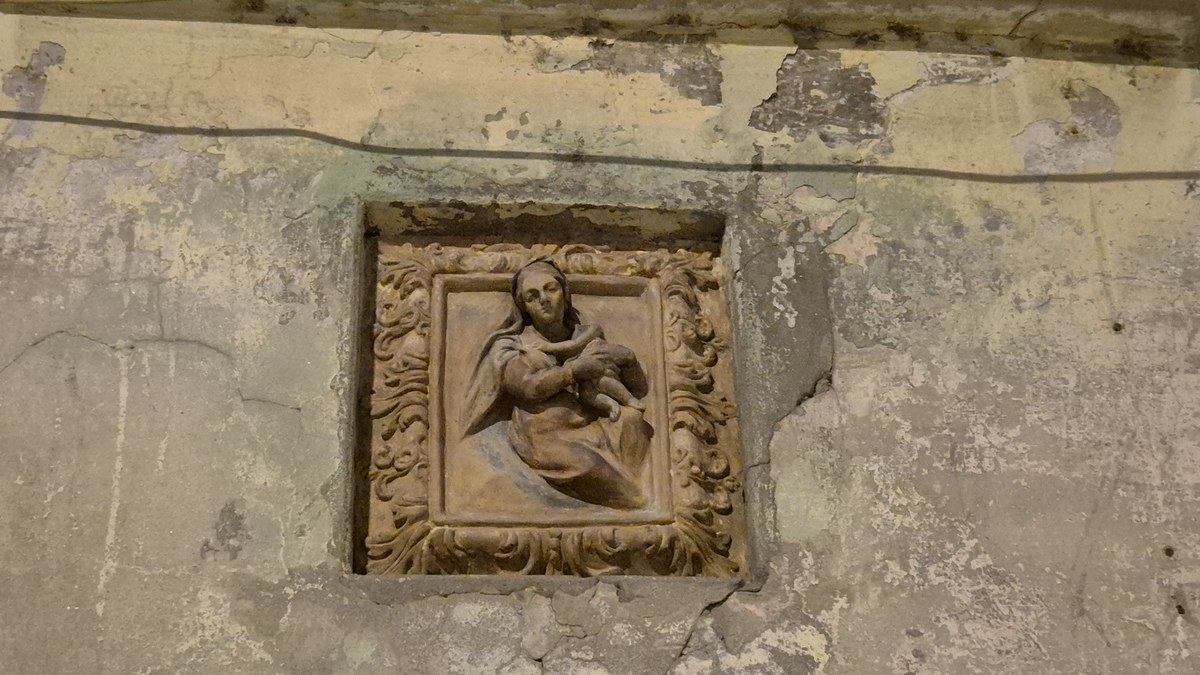
Set within a frame decorated with large acanthus leaves, the image recalls Renaissance models, from Raphael to Correggio, which are not unrelated to the stylistic influences of the 18th-century Bolognese school. With soft and elegant lines, Mary tenderly holds the Child, whose head is now missing.
Corso G. Mazzini, 80
In the niche below a 17th-century corner balcony, there was once a sculpture in the round created in 1734 by Luigi Fogli. It was one of the oldest plastic reproductions of the Madonna del Popolo. Stolen in 1981, it was immediately replaced by this terracotta sculpture by the Comacchio artist Giglio Zarattini
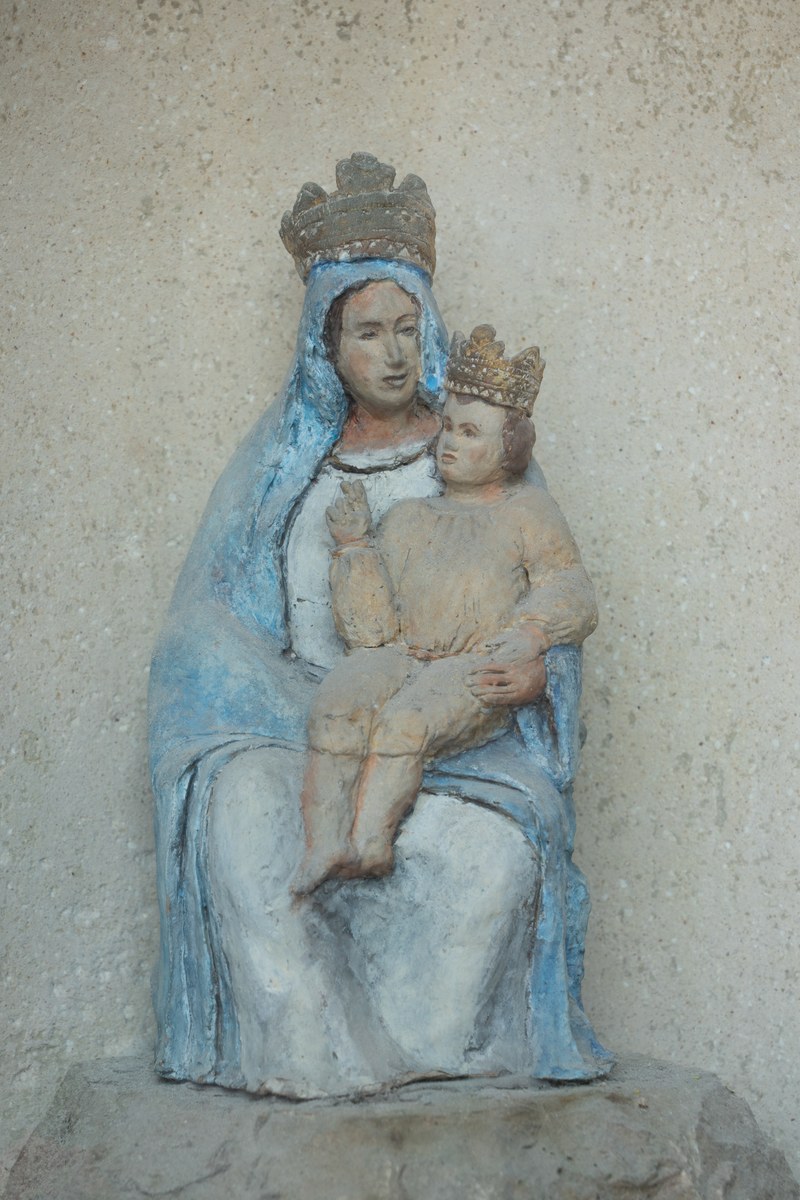
Corso G. Mazzini, 154/156
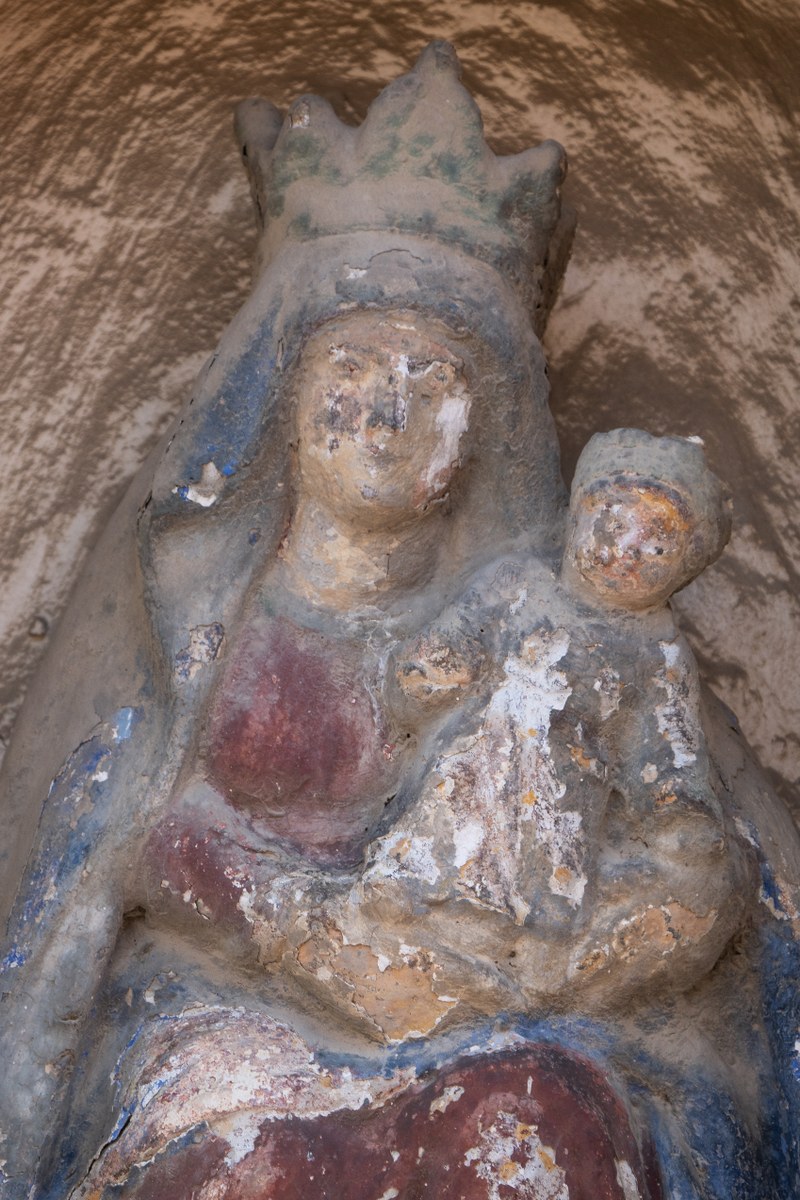
Image placed in a tabernacle that occupies the wall that partially closes the arch at the beginning of the Porticato dei Cappuccini. The author reproduces the image of the statue in the Aula Regia, stylizing and simplifying its forms.
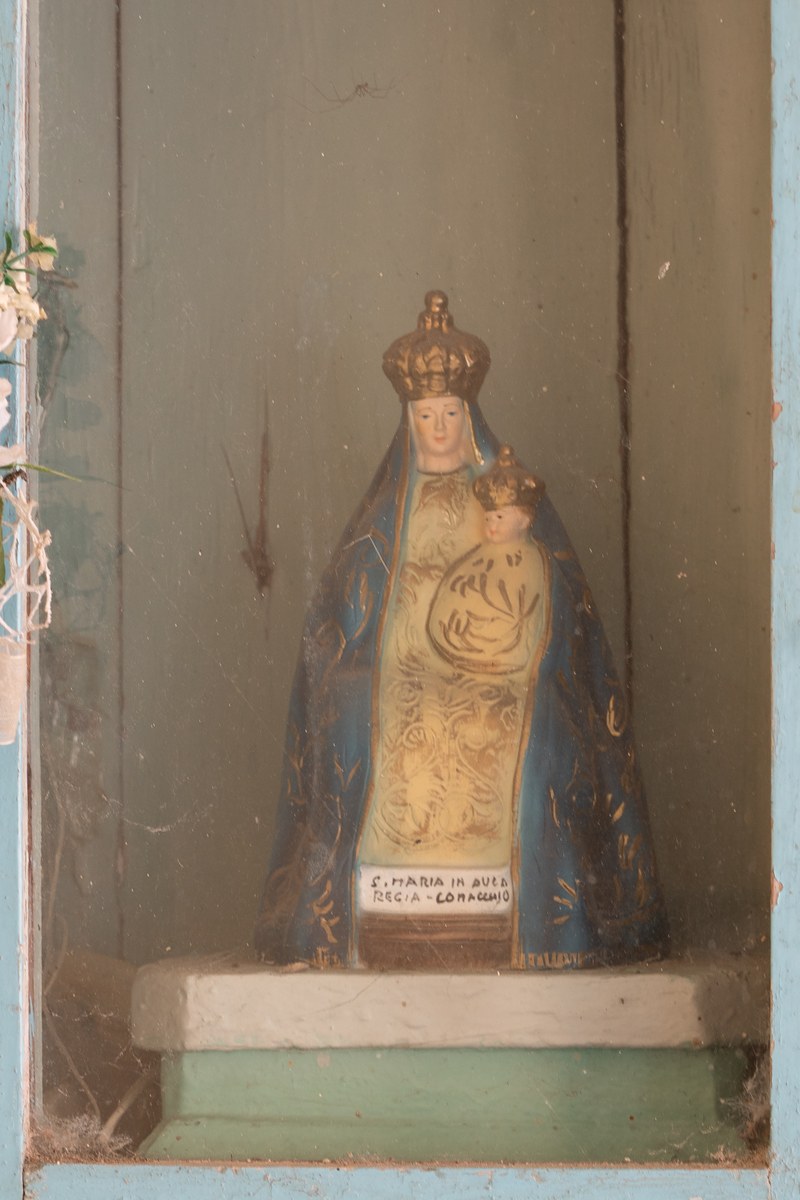
Porticato dei Cappuccini
Located in the center of the Portico dei Cappuccini, it was built as a sign of gratitude to the Virgin Mary for saving Comacchio from the earthquake of 1908. It covers an older image of Mary that inspired Mezzogori through 18th-century prints. A marble plaque bears the engraved prayer: “O Mary, I long for you alone, I place all my hope in you, and I want to consecrate the rest of my life to you.”